In this article
Home » Sleep Help for Children and Parents
Sleep is critical to healthy development, and like most things, the habits we learn in childhood carry through to our adult lives. That’s why it’s so important for parents to teach their children healthy sleep habits and promote restful sleep.
Below our guide explains how much sleep your child needs, sleep problems affecting different age groups, and how you can help your child get better sleep.
How much sleep does my child need?
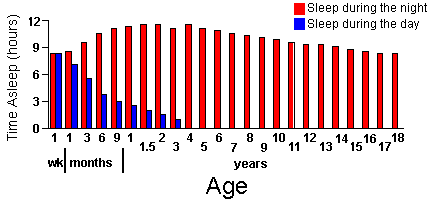
As children age, they develop a reliable
Source: University of Washington
Below is an overview of the recommended amount of sleep per age.
| Age | Nighttime sleep | Daytime napping | Total sleep |
|---|---|---|---|
| Newborn to 2 months | 8-9 hours | 7-9 hours | 16-18 hours |
| 2 to 4 months | 9-10 hours | 4-5 hours | 14-16 hours |
| 4 to 6 months | 10 hours | 4-5 hours | 14-15 hours |
| 6 to 9 months | 10-11 hours | 3-4 hours | 14 hours |
| 9 to 12 months | 10-12 hours | 2-3 hours | 14 hours |
| 12 to 18 months | 11-12 hours | 2-3 hours | 13-14 hours |
| 18 to 24 months | 11 hours | 2 hours | 13-14 hours |
| 2 to 3 years | 10-11 hours | 1-2 hours | 12-14 hours |
| 3 to 5 years | 10-13 hours | 0-1 hours | 11-13 hours |
| 5 to 12 years | 10-11 hours | None | 10-11 hours |
| 13 to 19 years | 9 hours | None | 9 hours |
| Adults | 7-8 hours | None | 7-8 hours |
Sleep Help for Infants and Toddlers
Even though your infant may be disrupting your own sleep patterns, as a parent you recognize that sleep is critical to your child’s healthy development. The American Academy of Pediatrics recommends promoting healthy sleep routines as soon as possible. Otherwise, sleep problems can persist throughout childhood.
Babies don’t develop circadian rhythms (the scientific term for your sleep-wake cycle) until they’re 3 to 6 months old. Until then, they sleep frequently throughout the day and night, alternating
Up until about age 2 or 3, children spend more than half of their day asleep, either in naps or during the night.
Common sleep issues for infants and toddlers
Below is a list of the most common sleep issues affecting infants and toddlers. We’ll review each of these in turn and provide tips for helping minimize the problem.
- Irregular circadian rhythms
- Trouble falling asleep on their own
- Trouble falling back asleep after nighttime feeding or otherwise being woken up
- Irritability from other developmental milestones
- Separation anxiety
- Resistance to bedtime
Irregular circadian rhythms
Babies don’t develop a regular sleep-wake cycle until 3 to 6 months. They are also used to movement from within the womb causing them to fall asleep, which occurred during
As your child ages, limit their naps during the day. Encourage them to sleep at night and promote nighttime as the appropriate time for sleep.
Trouble falling asleep on their own
Many infants are happy to fall asleep as they are cradled and
Rocking, or slowly transitioning from your baby
Trouble falling back asleep after nighttime feeding or otherwise being woken up
After being woken up for breastfeeding or by another stimulus in the home, babies can have difficulty falling back asleep as they haven’t learned to self-soothe yet.
One or
Irritability from other developmental milestones
Your baby is going through a lot – growing teeth, learning to walk and talk, and discovering the world. It’s exhausting. Even though they may be even more tired than ever from all the new experiences, all this new information and stimulation can disrupt their sleep patterns.
Stay calm and continue to encourage a regular bedtime and napping routine.
Separation anxiety
Separation anxiety is a normal part of development, but that doesn’t make it any less distressing for loving parents.
Help your child understand that you will still be there when they wake up by explaining sleep to them. Try distracting them, or gradually removing yourself from the room in stages – first
Resistance to bedtime
Especially as they grow up to be toddlers, children find one way to express their independence is through protesting bedtime. From their perspective, the world is their oyster and they have a lot of fun things to do, so they don’t have time to sleep.
Develop a bedtime routine and make it fun for your child to complete each step. You may use a reward system to encourage positive
Sleep Tips for Infants and Toddlers
The following tips can help you promote healthy sleep habits in your young child and make bedtime a more enjoyable experience for the two of you.
Stick to a consistent schedule and bedtime routine.
Developing a consistent napping, feeding, and wake schedule for your child gives them a sense of security and helps establish clear delineations between night and day, sleep and wake. Over time, your child will start to fall asleep on their own according to the schedule you set.
As your baby ages, a bedtime routine can prepare toddlers to calm down before bed and prevent bedtime tantrums. Repeat the same activities each night in order – e.g. bathtime, brushing their teeth, and reading a bedtime story
Manage naptime.
Naps account for a large amount of your child’s overall sleep, so they’re important and shouldn’t be missed. Otherwise, your child may become irritable or it can wreak havoc on the rest of their schedule. Encourage naps at the same time, but avoid taking them too closely before bed, or your child may have difficulty falling asleep when it’s bedtime.
Watch for signs of sleepiness, and act accordingly.
Whenever your child is sleepy, help them get to bed and fall asleep as soon as possible. This helps them understand the connection between being tired and falling asleep, so they’re better equipped to self-soothe and sleep independently later on. Watch for signs of tiredness such as crying, crankiness, or rubbing their eyes.
Follow safe sleep practices.
Sudden Infant Death Syndrome (SIDS) is the leading cause of death for infants up to 1 year. Protect your child from SIDS by always placing your infant on their back to sleep, removing any extra bedding or soft bedding in your infant’s bed, and not sleeping in the same bed as your infant. Extra bedding, as well as your body, are all soft surfaces that your baby can sink into and suffocate. If your child turns onto their side after falling asleep, that’s okay, but always position them on their back upon falling asleep.
Keep a sleep diary.
If you’re concerned your child isn’t sleeping “normally,” go ahead and keep a sleep diary. Note their sleep and wake times, and anything unusual you notice such as snoring. When you share it with your
Best Mattresses for Infants and Toddlers
The best mattress for infants and toddlers is a crib mattress. These measure 28 x 52 inches and are designed to fit in a crib or toddler bed frame. Both innerspring and foam crib mattresses are available, although innerspring is the most common. Both are also available as organic options, which are made of materials free of gases and pesticides.
When buying a crib mattress, ensure it fits snugly within the frame so there is no chance of the baby rolling into the edge and suffocating. You’ll find they’re firmer than adult mattresses, an extra precaution against SIDS.
Crib mattresses may be reused among multiple siblings in a family, but should not be bought used as there is no way to eliminate hygiene or safety concerns. Check for seals from the American Society for Testing and Materials and the U.S. Consumer Product Safety Commission. You can spot clean your crib mattress with mild soap and a damp cloth, or invest in waterproof sheet if your child is prone to bedwetting.
Sleep Help for Young Children and Pre-Teens
Once children enter kindergarten and elementary school, they’ve learned to sleep independently and nap less during the day. But they’re still learning a lot and need sufficiently restful sleep in order to stay happy and healthy.
As infants, half of your child’s sleep time is spent in REM sleep. That number decreases with age as they spend more time in restorative deep sleep.
Source: Murdoch Childrens Research Institute
Children have to adjust to a new schedule filled with school during the day and extracurriculars in the afternoon. The transition from summer to the school year can also be challenging. Continuing healthy sleep habits in your child at this age sets them up for successful sleep throughout the rest of their life and aids their academic performance.
Common sleep issues for kids and pre-teens
Below is a list of the most common sleep issues affecting children through elementary school.
- Bedtime anxiety
- Sleepwalking
- Snoring and sleep apnea
- Hyperactivity/restlessness from lack of exercise or excessive screen time
- Nightmares or night terrors
Bedtime anxiety
As children become more complex people, so do their imaginations. They may develop a fear of the dark from monsters or burglars. They also have more anxieties to deal with from school pressure and new friendships.
Encourage your child to express their feelings and help comfort them. Younger children may find a stuffed animal reassuring, while older children may find it helpful to write out their thoughts in a journal before bed.
Sleepwalking
Sleepwalking (known as somnambulism) is very common in children, peaking around ages 8 to 12, but
Keep your child safe by locking their door and windows, and keeping their floor clear of clutter. Try not to wake your child if you find them sleepwalking – instead gently guide them back to bed.
Snoring and sleep apnea
Up to 10 percent of children snore every night, and 2 percent of children experience sleep apnea. Sleep apnea is caused by a blockage of the airways. During an apneic episode, a person stops breathing momentarily during sleep, causing them to wake briefly to start breathing again, all of which interrupts their deep sleep.
Sleep apnea in children can be related to obesity, chronic sinus infections, or most commonly – oversized tonsils or adenoids. One of the top reasons for a tonsillectomy, in fact, is to alleviate symptoms of snoring or sleep apnea.
Hyperactivity/restlessness from lack of exercise or excessive screen time
When children start going to school, they may end up spending less time getting natural exercise and spend more time sitting in a chair or in front of a computer. Spending time in front of a computer or TV exposes your child to blue light – an intensely bright wavelength that tricks their brain into thinking it’s still daytime when it’s night, supercharging their mind so they have difficulty falling asleep at night.
Limit your child’s screen time and encourage plenty of
Nightmares or night terrors
Just as a child’s growing imagination can increase their bedtime anxiety, so
Source: JAMA 2015
If your child wakes up crying inconsolably, soothe them, remind them that you’re there and the dream is not real, and comfort them with a stuffed animal. A calming bedtime routine and minimizing stress during the day (from school or at home) can also reduce the incidence of nightmares.
Sleep Tips for Kids and Pre-Teens
Besides the above tips for specific issues, there are many general tips you can follow to give your
Maintain a consistent sleep schedule.
While your child’s schedule will change now that they’re going to school, it is still important to maintain consistency. This reduces bedtime resistance since they know what to expect, and helps them learn to stick to a regular sleep schedule once they’re adults.
Continue bedtime routines.
The routine can be simpler now that your child is older, but a good bedtime routine trains the mind to prepare for sleep. Consider turning off TVs, smartphones, and tablets as part of the routine. Adjust the bedtime routine or sleep schedule in the weeks before school starts to make the transition easier for your child.
Improve your child’s diet.
Children are more sensitive to stimulation than adults. Keep that from working against you by feeding your child a healthy diet, minimizing caffeine, sugar, and soda generally and especially in the evening. Don’t let your child go to bed hungry, but also avoid heavy meals before bed. Instead, give them a small bedtime snack of nuts,
Avoid stimulating activities and devices before bed.
As your child begins watching TV, leverage the parental control options and any smart devices to ensure your child watches age-appropriate material and doesn’t encounter too-scary shows that can provide good fodder for nightmares. Limit screen time in
Keep the bedroom dark.
Exposure to light interferes with your child’s ability to get restful sleep. If possible, avoid using nightlights altogether. If your child is afraid of the dark, use them sparingly and find options that use red light or include a timer. You can also invest in heavy blackout curtains if you live on a busy street or your child is highly sensitive to light.
Model good sleep hygiene for your child.
Your child is old enough to start seeing you as a role model, so it’s important for you to demonstrate healthy sleep habits yourself. Stick to a consistent sleep schedule, and keep your own bedroom cool, dark, and quiet. Keep TVs and computers out of all bedrooms in the house.
Best Mattresses for Kids and Pre-Teens
Once children outgrow their crib, parents typically get a twin mattress for their children, especially if they have a small bedroom. If the bedroom allows, some parents invest in a full or twin XL mattress their child can grow into. Twin XL mattresses are 5 inches longer and used in college dorms to accommodate taller children, while full mattresses are 16 inches wider than twin and twin XL beds.
Now that your child is ready for a big boy mattress, they can choose any of the types available to adults.
- Innerspring mattresses are by and far the most popular mattress option, being the traditional choice that’s been available for longest. These are an affordable option that suits a variety of sleepers, depending on preferred firmness and sleeping position. Use a traditional box spring for the best support.
- Memory foam mattresses are slightly more expensive, and react to a sleeper’s body heat, conforming to their body for ultimate comfort. They’re better for side and back sleepers. Use a platform or adjustable bed for best performance.
- Children with allergies or eco-minded parents may benefit from a latex mattress. While more expensive, these are available in all-organic options that are naturally resistant to
mold and dust mites. They are also known for sleeping cool and lasting longer than other mattresses.
A medium firm mattress is a good bet for most people, but if you find your child complaining of aches and pains upon waking or otherwise not feeling well-rested, consider a different firmness level or another type of mattress.
As for bedding, remember that higher thread count is more comfortable and durable over time, and it may not be as available with gimmicky or character-themed sheet sets. If your child sleeps hot, consider more breathable, cotton sheets. Waterproof mattresses and bedding can be helpful for children prone to bedwetting. They’re easily cleanable and don’t develop stains or
Choose a pillow for your child depending on their preferred sleep position. Stomach sleepers will need the thinnest pillow while side sleepers will need a thicker one. Choose one based on how well it supports your child’s neck and spinal alignment.
Sleep Help for Teenagers
The interesting thing about teenagers – at least when it comes to sleep – is that while they start to look and act like adults, they still need more sleep than adults.
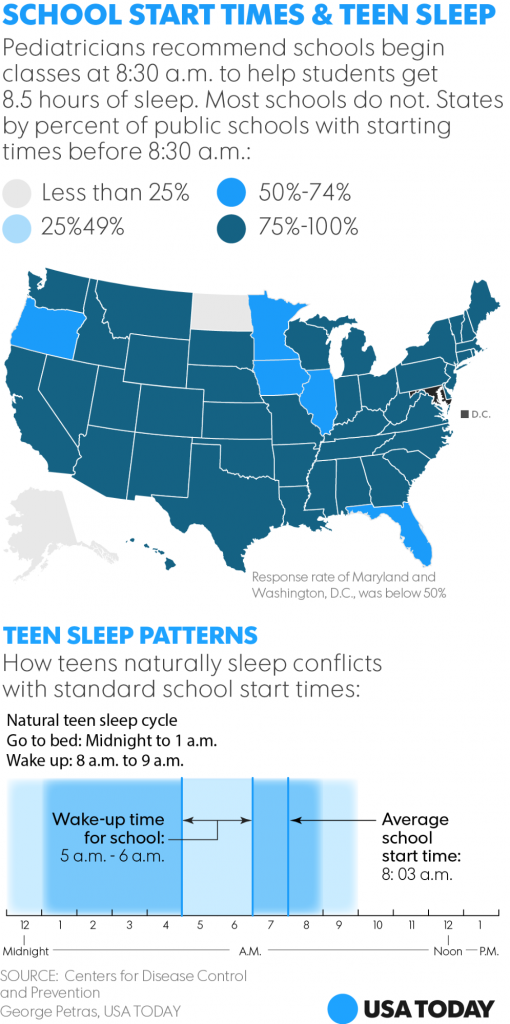
Teenagers need a full 9 hours of sleep, but
Making matters worse is that school starts earlier than when most teens are prepared to wake up, causing both the CDC and the American Academy of Pediatrics to urge schools to start at
Source: USA Today
An University of Minnesota study found that changing school start times to be later (per the recommendations of the CDC and the AAP) made an overwhelmingly positive imapct: 60 percent of teens were able to get 8 hours of sleep or more, teen car crashes went down by 70 percent, and academic performance improved across the board.
Common sleep issues for teenagers
Below is a list of the most common sleep issues affecting teenagers. Next we’ll review each of these in turn and provide tips for helping minimize the problem.
Puberty-related circadian rhythm shift
Human teenagers, like all mammals, experience a distinct circadian rhythm shift during puberty. They naturally start feeling tired later on, at 10 or 11pm versus 8 or 9pm before puberty. This makes early school start times even more challenging, and can cause some teenagers to mistakenly believe they have insomnia and develop related anxiety.
Explaining this shift to your teen can help minimize their concerns.
Increased responsibilities and time demands
Teenagers are going through a whirlwind of emotions. At the same time, they’re having to deal with increased pressures from school, home, extracurricular activities, and jobs.
Talk with your child to see if there’s a way they can drop an activity, or work with them to prioritize the most important ones while still maintaining a healthy social life. You may also want to connect them with a therapist or mentor, or help them get started with stress relieving practices like meditation or yoga. They’ll carry these techniques throughout their adult life, preparing them to deal with future stress.
Lack of exercise
The one thing that ends up getting cut that shouldn’t, unfortunately, is exercise. When done in the morning or afternoon, physical activity tires the body and primes one for sleep at night.
Teens should join a sport or get exercise otherwise, but avoid doing so at night as it energizes the body and makes it tougher to fall asleep.
Too much time in front of blue light
The stereotypical teenager image calls to mind one hunched over a phone texting their friend. Teens spend way too much time staring at blue light devices, from doing homework on computers at school and at home to downtime socializing with friends, watching TV, or playing video games. While much of this activity can’t really be avoided, parents can encourage teenagers to stop using their phone 1 hour before bed, and turn on the night filter in the hour or two before that to minimize their exposure to blue light.
Sleep Tips for Teenagers
Here is some more general advice you can follow to help your teen enjoy a good night’s sleep.
Maintain a regular sleep schedule.
Are you sensing a trend? One of the simplest ways to ensure your child gets enough sleep is with a routine. Help your teenager set a standard bedtime, so their body becomes used to getting sleepy at that time. Do what you can to help make it happen, by helping them organize and prioritize activities and homework, and keeping the house in a calm state in the hours before bed.
Your teen may be so exhausted they need to nap – limit these to “power naps” of 20 minutes or so earlier in the day, so they don’t enter deep sleep and have trouble falling asleep later. On the weekend, you can allow them sleep in an hour or two, but don’t overdo it – or it will mess with their sleep cycle during the week and make Mondays even harder.
Limit evening activities during school nights.
Sports, jobs, and extracurricular activities all cut into homework and study time – as well as sleep. Work with your teen to limit evening activities so they can maximize time spent on homework. Getting their homework done will allow them to get to bed easier – and with an easier mind.
Encourage regular exercise.
Exercise is critical to good health, emotional wellbeing, and restful sleep. Do your best to ensure your teen gets at least 30 minutes of physical activity every day.
Avoid caffeine, drugs, and other stimulants.
Due to increased pressures and/or less oversight on their diet, teens begin consuming more caffeine from soda, chocolate, and coffee. This can keep them wired at night. Some medications they’re taking, like Ritalin or Adderall for ADHD, may contribute to insomnia. Many teens also experiment with smoking, alcohol, and drugs, all of which can wreak havoc on sleep.
Use smart lighting at home.
Limit your teen’s exposure to blue light whenever possible, and educate them on the harmful effects and ways it interferes with sleep. If possible, keep lights low in the house late at night or use dimmers or other soft lighting. You may also invest in light therapy boxes, which are bright light boxes that a person can sit in front of for 30 minutes to help regulate their circadian cycle and boost wakefulness.
Best Mattresses for Teenagers
If you purchased a quality twin, twin XL, or full mattress after your child outgrew their crib mattress, your teen may continue sleeping comfortably on the same bed. However, some teens may experience a growth spurt and need to transition to a twin XL mattress if they previously had a full or twin. You also may need to replace the mattress as they enter high school, depending on the lifespan of the original mattress you purchased.
Below are the typical lifespans for average mattresses of each type:
| Mattress Type | Expected Lifespan |
| Innerspring | 5.5 years |
| Latex hybrid | 6 years |
| Memory foam | 7 years |
| Airbed | 7.5 years |
| Latex | 8.5 years |
Additional Resources
For parents of infants and toddlers
- The Cleveland Clinic provides sleep tips for parents of newborn infants.
- Every few years, the American Academy of Pediatrics releases updated information for preventing SIDS risks. The 2016 version is available online.
- The Baby Whisperer forums has multiple sub-forums dedicated to various sleep issues in infants and toddlers.
- Parenting Magazine offers an overview of different sleep training methods for infants and getting your child to sleep through the night.
For parents of kids and pre-teens
- Parents can find bedtime stories through read along videos on Youtube, tablet and smartphone apps, best sellers lists on Amazon, and free online story databases like Bedtime.com, Tonight’s Bedtime Story, and Storyberries.
- The Cleveland Clinic’s guide to sleepwalking explains signs, what to expect, and how to know if it’s something more serious you should discuss with your doctor.
- Harvard University’s School of Public Health offers guidelines to promote healthy sleep and prevent obesity in school age children for different age groups and suggested amounts for physical activity and screen time.
- SleepForKids.org is a site run by the National Sleep Foundation for kids – it’s written for a child’s reading level and offers fun educational games and puzzles that teach the importance of sleep.
For parents of teenagers
- KidsHealth.org has multiple articles dedicated to sleep needs, issues, and unique affecting children and teens. The site helpfully categorizes topics by intended audience – parents, kids, and teenagers.
For parents concerned about sleep disorders
- UCLA Sleep Disorders Center provides an overview of snoring in children, how to recognize if it’s apnea or snoring, and options for clearing up your child’s airways during sleep.
- Stanford Health Care’s in-depth overview of common pediatric sleep disorders can help you determine whether your child’s sleep issues could be indicative of something more abnormal.
- Amazon’s Sleep Disorders books section includes helpful best-sellers like The Sleepeasy Solution: The Exhausted Parent’s Guide to Getting Your Child to Sleep from Birth to Age 5 and Healthy Sleep Habits, Happy Child, 4th Edition: A Step-by-Step Program for a Good Night’s Sleep.
For all parents
- The American Academy of Pediatrics runs HealthyChildren.org, whose Sleep section provides specific tips by age and a variety of information from the safety of bunk beds to toddler bedtime resistance.
- The Food and Drug Administration maintains regular oversight of approved sleep drugs and medications. Consult this list and your doctor before giving any medication to your child.
- WebMD lists sleep tips by age, and had a host of other articles dedicated to children and sleep (and parents, too).
- Parents Magazine has an entire section devoted to sleep, with articles ranging from “How much sleep does my 9 year old need?” to “8 Best Solutions to Beat Bedwetting.”
- Connect with other parents through online forums like the Parenting subreddit, Sleep subreddit (and related subreddits for various sleep disorders), and Parenting Magazine’s forum.